
Home Icon Home Right Arrow Icon Creating an enabling environment for research Right Arrow Icon Shaping the global research agenda

Creating an enabling environment for research

Shaping the global research agenda

TDR engages a wide range of stakeholders, including scientists, funders and governments, to shape the global research agenda on infectious diseases of poverty. This section highlights TDR’s efforts in fostering an inclusive and equitable research environment that can respond to emerging challenges. Furthermore, TDR plays an influential role in the global debate around key health issues via the Global Health Matters podcast. These initiatives collectively drive impactful and inclusive research efforts.

Objectives

  • To engage a wide range of stakeholders to shape the global research agenda on infectious diseases of poverty 

Key activities

  • Responding to emerging challenges such as the impact of artificial intelligence on research activities.  
  • Facilitating the harmonization of funders’ investments in research capacity through the ESSENCE on Health Research initiative 
  • Promoting an inclusive infectious disease research agenda that recognizes the health needs of women, girls, men, boys and people in all their diversity, including those with non-binary identities 
  • Influencing the global debate around key health issues through the Global Health Matters podcast 

2025 key achievements and updates

  • TDR is supporting the Pan-African Bioethics Initiative (PABIN) and Armauer Hansen Research Institute (AHRI) to build African leadership in AI ethics and develop practical guidance for ethical AI innovation in health within LMICs. TDR also supports the Strategic Initiative for Developing Capacity in Ethical Review (SIDCER), which is responding to the impact of artificial intelligence on research activities. (See Spotlight story below.)
  • TDR provided technical support to develop and launch the first WHO global research agenda on knowledge translation. TDR launched an open call to support research projects in LMICs that aim to implement the priorities and identified five projects for funding in 2026/27. 
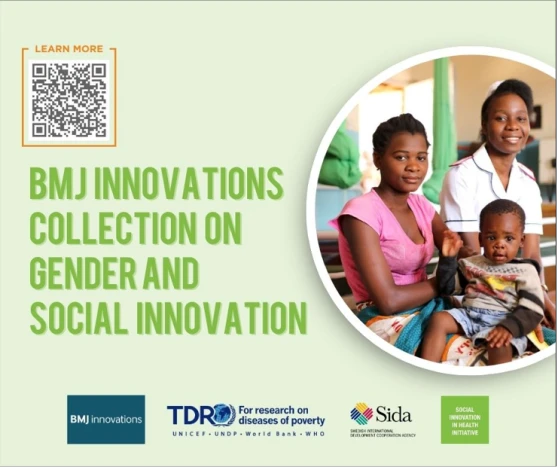
  • TDR supported the incorporation of an intersectional gender approach in health research of social innovation through SIHI hubs in the Philippines, Colombia and Uganda. A special BMJ Innovations collection and a dedicated digital dissemination platform were launched to showcase this work and support capacity strengthening. (See Spotlight story below.)
BMJ Innovations Collection
  • TDR supported the incorporation of an intersectional gender approach in health research of social innovation through SIHI hubs in the Philippines, Colombia and Uganda. A special BMJ Innovations collection and a dedicated digital dissemination platform were launched to showcase this work and support capacity strengthening. (See Spotlight story below.)

intersectional gender approach in health research

Spotlight

Building trust in research and science 

Strengthening ethics review systems is essential to ensure that research involving human subjects is conducted responsibly. Over the past 25 years, TDR has advanced this mission through the Strategic Initiative for Developing Capacity in Ethical Review (SIDCER) and its regional arm, the Forum for Ethical Review Committees in Asia and the Pacific (FERCAP). This initiative is now responding to emerging ethical challenges such as the impact of artificial intelligence on research activities.
Building trust in research and science 

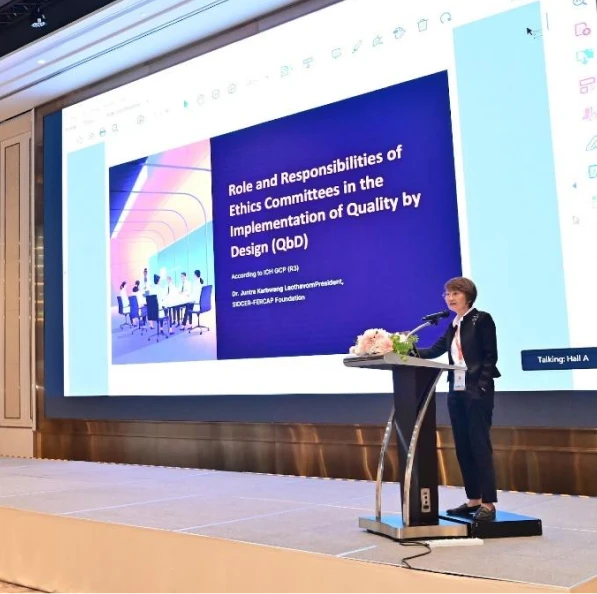
Professor Juntra Laothavorn speaking at the 25th FERCAP International Conference in November 2025 in Bangkok, Thailand. Photo courtesy of Professor Laothavorn. 

Spotlight

Incorporating and promoting an intersectional gender approach in social innovations in health research 

A new BMJ Innovations Collection highlights the role of an intersectional gender approach in advancing research on social innovations in health. Developed in collaboration with TDR and the Social Innovation in Health Initiative (SIHI), this special collection showcases how inclusive, community-led solutions are addressing health inequities. 
BMJ Innovations Collection

Spotlight

Building trust in research and science 

Strengthening ethics review systems is essential to ensure that research involving human subjects is conducted responsibly. Over the past 25 years, TDR has advanced this mission through the Strategic Initiative for Developing Capacity in Ethical Review (SIDCER) and its regional arm, the Forum for Ethical Review Committees in Asia and the Pacific (FERCAP). This initiative is now responding to emerging ethical challenges such as the impact of artificial intelligence on research activities.

SIDCER was launched to address persistent variations in ethics oversight across countries and institutions. FERCAP subsequently emerged as the regional mechanism driving SIDCER’s implementation in Asia, promoting harmonized standards and shared commitment to responsible research conduct. Over 25 years, the network has demonstrated how regional collaboration can reinforce ethical governance in environments with differing regulatory frameworks, capacities and resources.

Building trust in research and science 

Professor Juntra Laothavorn speaking at the 25th FERCAP International Conference in November 2025 in Bangkok, Thailand. Photo courtesy of Professor Laothavorn. 

Responding to AI and emerging ethical challenges 
It is essential to ensure that ethics oversight evolves alongside scientific and technological advancements. SIDCER/FERCAP has expanded its focus to address new and emerging areas. For example, given the rapid expansion of artificial intelligence tools, data-driven methodologies and digital surveillance, the network has begun to explore structured approaches for reviewing: 
  • data governance and privacy protections;
  • bias and fairness in algorithms;
  • transparency and accountability in AI systems; and
  • ethical implications of digital consent models. 
This forward-looking approach positions SIDCER/FERCAP as a key resource for institutions preparing for next-generation research ethics challenges. 
“As it moves into its next phase, SIDCER/FERCAP remains a vital platform for anticipating emerging ethical issues, reinforcing protections for research participants and supporting the responsible conduct of research,” said Juntra Laothavorn, Professor Emeritus at Mahidol University in Thailand and President of the SIDCER-FERCAP Foundation for Promoting the Development of Human Research Ethics. 

Spotlight

Incorporating and promoting an intersectional gender approach in social innovations in health research 

A new BMJ Innovations Collection highlights the role of an intersectional gender approach in advancing research on social innovations in health. Developed in collaboration with TDR and the Social Innovation in Health Initiative (SIHI), this special collection showcases how inclusive, community-led solutions are addressing health inequities. 

Titled “Gender and social innovation,” the Collection explores innovative social solutions to gender and other social axes of inequity in health and presents experiences from Africa, Asia and Latin America. Health challenges go beyond clinical interventions; social, economic, cultural and political factors deeply influence health outcomes. Understanding how and why gender intersects with socio-economic factors within wider systems of disadvantage and privilege is crucial for achieving health equity. 

BMJ Innovations Collection

The Social Innovation in Health Initiative (SIHI) is a network of partner institutions and a community of stakeholders established in 2014 through TDR’s leadership. The Initiative aims to unlock the capacity of all health system actors and stakeholders, including innovators, communities, policy-makers, frontline workers, private sectors and academics, to work in collaboration and advance community-engaged social innovation in health care delivery in the Global South. 

Authored by SIHI innovators and champions, the Collection calls for a deeper integration of an intersectional gender approach in health research of social innovations. It highlights the importance of recognizing how intersecting factors—such as gender, age, ethnicity, social class and disability—shape health outcomes and access to services under complex, simultaneous and overlapping systems and structures of power. 
This collection builds on TDR’s and SIHI’s commitment to equity-centered innovation through a decade of identifying and supporting more than 50 social innovations that prioritize community voices and their lived experiences. By applying an intersectional gender lens, these innovations are not only more inclusive but also more effective in addressing the root causes of health disparities. 
TDR encourages researchers, implementers and policy-makers to explore the Collection and reflect on why intersectionality matters in health research and how gender-responsive, community-driven approaches can strengthen health systems efforts to fight infectious diseases and accelerate progress toward the Sustainable Development Goals.